The Cotton Club – Harlem's Iconic Nightclub (1923–1940)
The Cotton Club was one of the most famous nightclubs in American history. Located in Harlem during the Jazz Age and Prohibition (primarily 1923–1935), it later moved to Midtown Manhattan until closing in 1940.
Originally the Club Deluxe owned by boxer Jack Johnson, gangster Owney Madden took over in 1923 and rebranded it with a lavish "plantation" / "jungle" theme to attract wealthy white patrons.
It became Harlem's premier venue, known as the "Aristocrat of Harlem," with spectacular revues and national radio broadcasts.
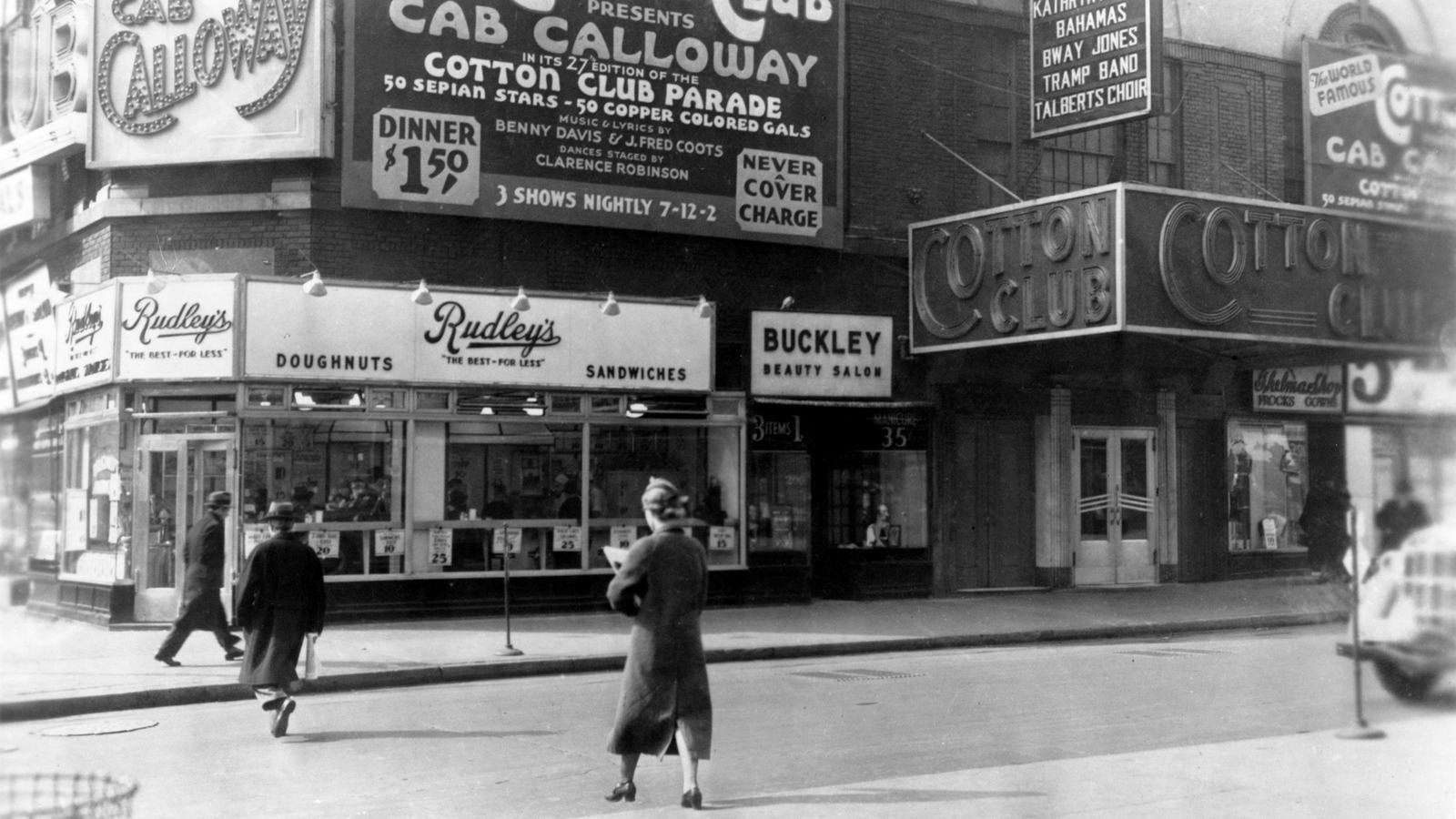


Exterior views of the Cotton Club in Harlem during its peak
- Duke Ellington – House band 1927–1931; experimented with "jungle style" and debuted classics like "Mood Indigo"
- Cab Calloway – Took over in 1931; famous for high-energy scatting and "Minnie the Moocher"
- Lena Horne – Started as a chorus girl
- Also featured: Billie Holiday, Ethel Waters, Louis Armstrong, Nicholas Brothers, Fats Waller, Adelaide Hall & more


Iconic shots of Duke Ellington and Cab Calloway at the Cotton Club
Black performers dazzled on stage during the Harlem Renaissance, but the club enforced a strict whites-only audience policy (Black patrons were rarely admitted, if ever).
Acts often featured exoticized, stereotypical "jungle" or "plantation" settings for white entertainment—highlighting deep racial contradictions and exploitation of the era.

Typical elaborate stage productions and chorus lines that defined the shows
The 1935 Harlem Riot damaged business. The club relocated to Midtown in 1936 but never recaptured its Harlem-era magic and closed permanently in 1940.
Its legacy includes launching jazz giants, shaping American music, and symbolizing both creative brilliance and Jim Crow-era racial inequality. It was later dramatized in Francis Ford Coppola’s 1984 film The Cotton Club.